Balloon Column Ideas (Easy DIY Towers for Any Party)
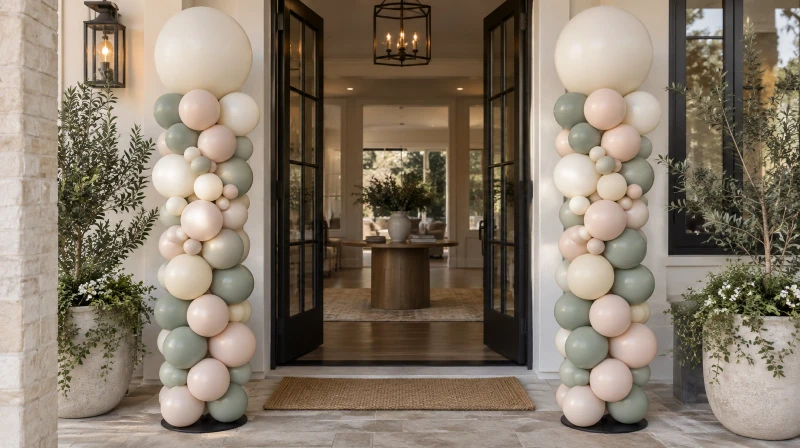
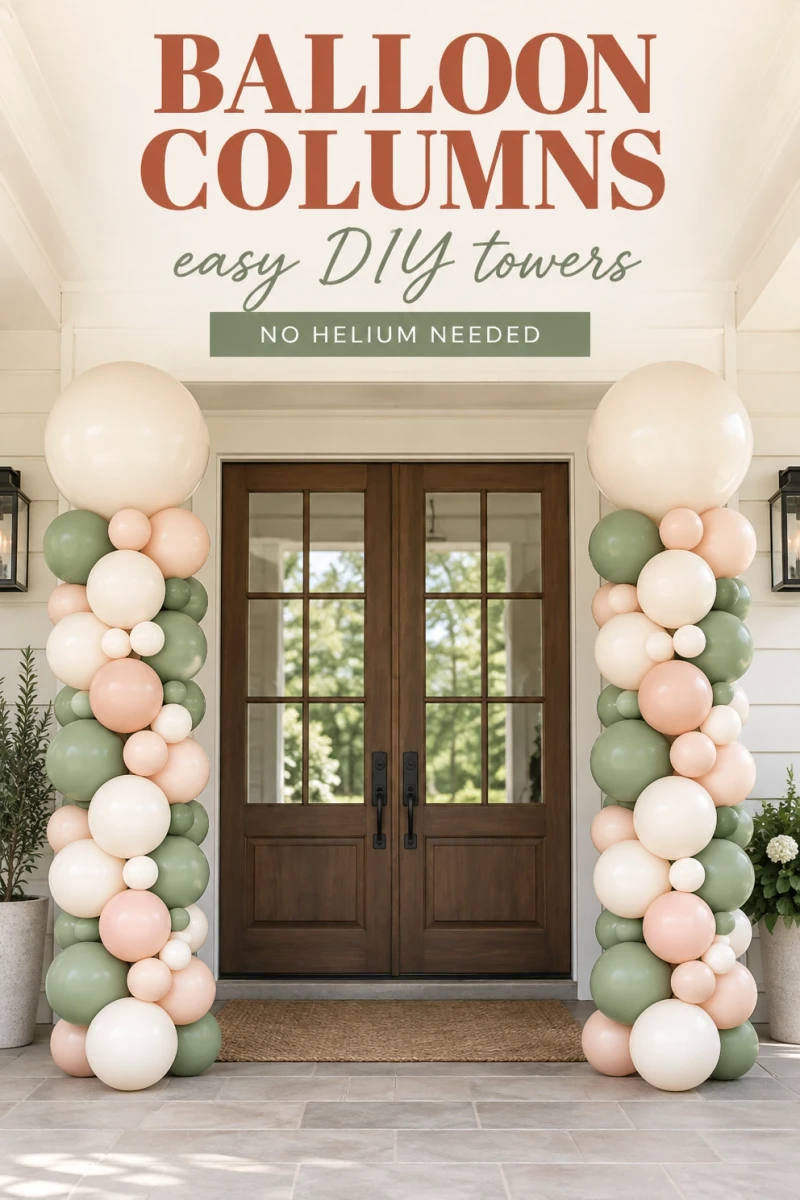
Balloon columns (also known as balloon towers) are tall, freestanding vertical arrangements that bring instant grandeur to any celebration. Whether framing a grand entrance, anchoring both ends of a dessert buffet, or flanking a graduation stage, they make an impressive visual statement. Best of all, unlike floating helium arches, balloon columns are built entirely with air-filled balloons, making them long-lasting, budget-friendly, and resistant to premature deflation.
At DecorWillow, our primary design rule for columns is simple: always build them in matching pairs. A single column often looks like an accidental leftover, whereas a balanced pair creates an intentional visual frame that draws the eye toward your focal point. This comprehensive guide covers popular column styles, exact sizing formulas for 5-to-6-foot towers, step-by-step instructions for both stand and stand-free methods, and crucial stability practices.
- Best for: Front doors, entryways, dessert tables, photo backdrops, and stages
- Mechanism: 100% air-filled (no helium required)
- Arrangement: Best built in symmetrical pairs
- Cost: About $18 to $22 per column (with reusable stand kit)
- Assembly time: About 30 to 45 minutes per column once balloons are inflated
Table of Contents
- What is a balloon column
- Popular balloon column styles
- The exact 5–6 ft column sizing formula
- With a stand vs without (no-stand guide)
- Step-by-step: how to build a balloon column
- Before and after doorway transformation
- Choosing the perfect topper
- Color palettes and theme ideas
- Setup, weighted bases, and stability tips
- Exact supplies and budget breakdown
- Worth it vs skip
- Small space and tabletop mini columns
- Common mistakes to avoid
- Balloon column checklist
- Frequently asked questions
- Related articles
What is a balloon column
A balloon column is a self-supporting vertical stack of air-filled balloon clusters built around a central spine (or tied under tension) and anchored by a weighted base. Because helium is not used, the balloons do not pull upward; instead, they sit securely nested together, creating a clean architectural column.
Columns typically stand between 5 and 7 feet tall, finishing at the crown with a statement topper—such as a 36-inch jumbo sphere, a foil milestone number, or a floral burst. They can stand alone as majestic entrance sentinels or seamlessly complement an organic balloon garland.
Popular balloon column styles
Depending on your party theme and skill level, you can build your column in several distinct aesthetic patterns:
- Classic Stacked (Block Style): Each 4-balloon cluster is a solid color, creating horizontal color blocks stacked up the pole.
- Spiral Column: Clusters are built using two or three alternating colors. By rotating each consecutive cluster 45 degrees as you slide it down the pole, the colors form a continuous spiral barber-pole effect.
- Modern Organic Tower: Instead of uniform balloon sizes, clusters combine 5-inch, 10-inch, 12-inch, and 18-inch balloons in varied groupings, giving the column a whimsical, free-form silhouette.
- Character / Themed Topper: A classic spiral column crowned with a themed mylar shape (like a dinosaur, safari animal, or graduation cap).
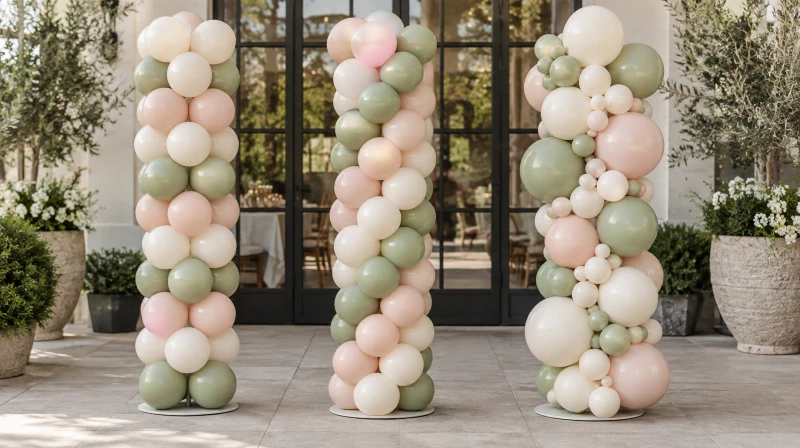 A matching pair of balloon columns frames a doorway or cake table for a polished, celebratory look.
The exact 5–6 ft column sizing formula
A frequent challenge for DIYers is estimating how many balloons are required to hit their desired height. Sizing your balloons consistently is the secret to a professional look. Use this tested formula for classic 4-balloon cluster columns:
| Desired Height | Number of 4-Balloon Clusters | Total Latex Balloons | Recommended Balloon Size | Overall Column Diameter | Base Weight Required |
|---|---|---|---|---|---|
| 3.5–4 Feet (Tabletop / Mini) | 5 to 6 clusters | 20–24 balloons | 5-inch balloons (sized to 4.5”) | 8 to 10 inches | 3 to 4 lbs |
| 5 Feet (Standard Indoor) | 7 to 8 clusters | 28–32 balloons | 10-inch balloons (sized to 9”) | 16 to 18 inches | 5 to 8 lbs |
| 6 Feet (Full Grand Entrance) | 9 to 10 clusters | 36–40 balloons | 10-inch balloons (sized to 9”) | 16 to 18 inches | 8 to 10 lbs |
| 7 Feet (Stage / Outdoor) | 11 to 12 clusters | 44–48 balloons | 12-inch balloons (sized to 10”) | 18 to 20 inches | 12 to 15 lbs |
The Golden Rule of Sizing: Always under-inflate your balloons slightly. If using standard 10-inch balloons, inflate them to 9 inches using a cardboard sizer box. This ensures rounder, softer balloons that nest snugly against the pole without popping under friction.
With a stand vs without (no-stand guide)
You can construct balloon columns using either a dedicated hardware stand kit or household craft supplies:
Method A: With a reusable balloon stand kit (Recommended)
- Components: A hollow plastic base (filled with water or sand) and interlocking fiberglass or PVC pole segments.
- Advantages: Fastest assembly (under 30 minutes), perfectly rigid vertical lines, and completely reusable for future events.
- Best for: Outdoor setups, high-traffic doorways, and heavy foil toppers.
Method B: The no-stand technique (No hardware needed)
If you don’t own a stand kit, you can build a stable column using string tension:
- The water weight base: Fill a heavy-duty 12-inch latex balloon with 4 cups of water and double-knot it. Tuck this water weight inside your bottom 4-balloon cluster so it sits flat against the floor.
- The tension spine: Tie a length of 150 lb braided nylon cord or strong monofilament fishing line to the center knot of the bottom cluster.
- Stacking and weaving: Place the second 4-balloon cluster over the cord, push it down firmly so the balloons interlock with the layer below, and wrap the cord in a figure-8 around two opposite balloons. Pull snug before adding the next cluster.
- Top anchor: Tie off the top of the cord to your topper balloon. For columns taller than 5 feet, secure the top cluster to a wall or doorframe using a clear removable hook to prevent leaning.
Step-by-step: how to build a balloon column
Here is the foolproof assembly process using a standard column stand:
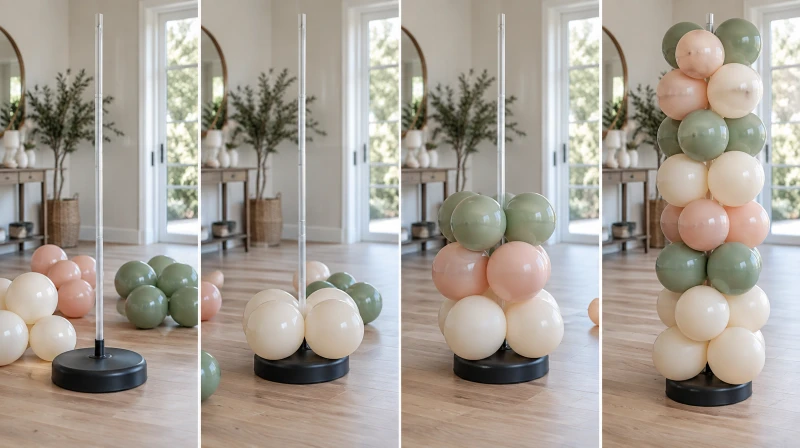 Stacking four-balloon clusters up a pole builds a sturdy column with no helium needed.
- Assemble the base: Fill the water-weight base bladder to capacity (approx. 6–8 lbs of water) and insert the central pole segments firmly.
- Inflate into duplets: Inflate two balloons to identical 9-inch diameters. Tie their necks together in a secure knot to form a “duplet.”
- Form a cluster of four (a “quad”): Take two duplets, cross their center knots together, and twist two adjacent balloons around each other twice. The four balloons will lay flat in a cloverleaf shape.
- Load onto the pole: Push the center intersection of the quad onto the pole. Twist two opposing balloons around each other once to lock the cluster firmly onto the pipe.
- Stack and alternate: Push the next quad down the pole until it rests tightly against the layer below. Rotate the new cluster 45 degrees so its balloons nestle naturally into the valleys of the cluster beneath. Repeat until you reach the top of the pole.
- Affix the topper: Fasten your statement balloon to the pole cap using 260Q tying balloons or heavy-duty glue dots.
Before and after doorway transformation
Framing an entrance completely redefines the guest arrival experience. Notice how a plain residential entrance becomes a festive portal:
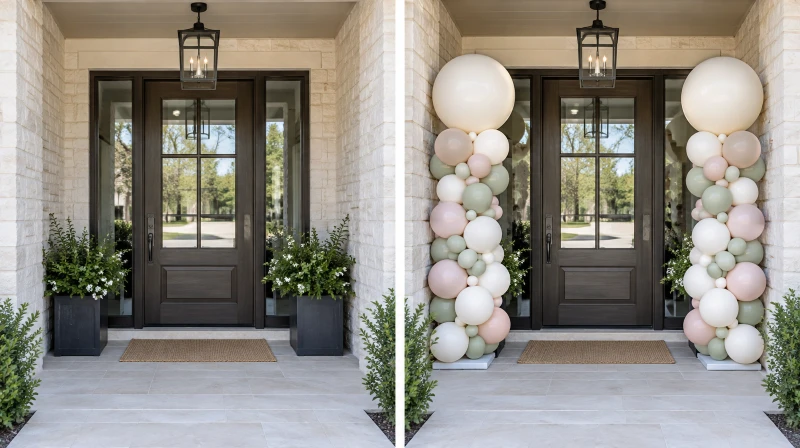 The same doorway, transformed with a matching pair of balloon columns framing the entrance.
Key elements in this transformation:
- Symmetry: Two identical 6-foot columns flank both sides of the doorframe.
- Proportion: The 18-inch column diameter leaves ample walking clearance through the doorway.
- Cohesive colors: The balloons reflect the interior party palette, setting immediate anticipation for the event inside.
Choosing the perfect topper
The topper gives your column personality and extra height. Choose a topper that complements your theme:
- Jumbo Latex Balloon (24” or 36”): A massive round balloon in your feature color, finished with a collar of four 5-inch mini balloons around its neck to hide mechanics.
- Foil Milestone Numbers: 34-inch or 40-inch foil numbers for milestone birthdays or graduations.
- Foil Starbursts & Orbs: 12-point foil starbursts or metallic sphere balloons that add modern geometric sparkle.
- Floral or Greenery Bursts: Faux pampas grass, palm spears, or eucalyptus stems tucked into the top cluster for a boho or botanical celebration.
Weight Balancing Tip: If your topper weighs more than 4 ounces (such as an oversized character foil), ensure your column base is loaded with at least 8 to 10 lbs of ballast to eliminate top-heavy sway.
Color palettes and theme ideas
Limiting your palette to two or three cohesive shades creates a clean, designer appearance:
 Two or three coordinated colors arranged in spirals or blocks create a striking, photogenic tower.
- Classic Black Tie: Matte black, chrome gold, and crisp white arranged in a spiral.
- Pastel Dream: Soft blush, lavender, and butter yellow with a white cloud topper.
- Nautical / Boy Baby Shower: Dusty blue, slate, and metallic champagne.
- Graduation Spirit: School primary color paired with chrome silver or gold.
For complementary shade formulas, browse our balloon garland color combinations for matching color palettes.
Setup, weighted bases, and stability tips
A toppling column is every host’s nightmare. Follow these stability and environmental rules:
1. Base weight guidelines
- Indoor rooms with low foot traffic: 5 to 6 lbs of water ballast is sufficient.
- Busy entrances or outdoor patios: Use 10 to 15 lbs of weight. If your stand’s water bag is too light, place a circular flat barbell weight, patio umbrella base, or a decorative sandbag directly over the plastic foot.
2. Outdoor weather precautions
- Sunlight and temperature: Direct heat causes latex balloons to expand and oxidize, turning glossy finishes matte within hours. Position columns under shaded porch eaves or covered pavilions.
- Wind limits: Never leave freestanding balloon columns in winds exceeding 12–15 mph. In breezy conditions, anchor the top of the column to an exterior column or railing with clear 20 lb monofilament fishing line.
- Safety standard: Adhere to responsible balloon practices as outlined by The Balloon Council—always secure outdoor balloons firmly and pop and dispose of them properly after use.
Exact supplies and budget breakdown
Building balloon columns yourself yields immense savings compared to commercial balloon delivery services:
| Item | What’s Included | Approx. Cost |
|---|---|---|
| Balloons (Pair of Columns) | 80 quality 10” latex balloons (two colors) | $14 |
| Reusable Stand Kit (Pair) | 2 water-fillable bases + interlocking poles | $18 |
| Topper Balloons (Pair) | Two 36” jumbo balloons or foil numbers | $8 |
| Dual-Action Balloon Pump | Manual hand pump or basic electric inflator | $12 |
| Estimated Total First-Time Cost | Complete kit for two 6-foot columns | ~$52 |
| Cost per Future Column | Reusing the stands & pump (balloons only) | ~$10–$12 |
Worth it vs skip
- Worth it:
- Reusable column stand kits: Spending $18 on a durable pair of stands saves hours of frustration and will serve dozens of future birthdays and holidays.
- Electric balloon pump: Manually blowing up 80 balloons takes immense lung power; a $15 electric pump inflates an entire column in 8 minutes.
- A mini balloon collar beneath the topper: Adding four small 5-inch balloons at the base of your topper conceals the knot and pole cap flawlessly.
- Skip:
- Helium: Helium offers zero structural support for columns and deflates within 12 hours. Air-filled columns easily stand crisp for 3 to 5 days indoors.
- Single standalone columns: A lone column beside a wide wall looks unfinished. If space only allows one installation, build an organic balloon arch instead.
Small space and tabletop mini columns
If your celebration is in an apartment or cozy dining room, scale down the dimensions without sacrificing style:
- Tabletop towers (3 feet): Use 5-inch mini balloons sized to 4.5 inches on a short 30-inch acrylic rod. Place one at each end of your dessert station.
- Half-column wall hugs: Build a 4-foot column and anchor it flush against the corner of a room using removable wall hooks.
- For additional compact ideas, read our small-space party decorating ideas.
Common mistakes to avoid
- Inconsistent balloon inflation: If balloons are not sized to identical diameters, the column will look lumpy and spiral patterns will distort. Use a sizer box.
- Under-weighting the base: A light base will tip over when guests brush past it. Always fill water bags completely.
- Building too far in advance outdoors: While indoor columns last several days, outdoor columns should be placed no more than 2 to 3 hours before party time to avoid weather wear.
- Too many competing colors: Using more than three colors in a classic spiral makes the column look chaotic. Stick to two or three harmonized tones.
Balloon column checklist
- Color palette chosen (2 to 3 coordinating shades)
- Balloons purchased (40 per column + 8 spares)
- Statement topper balloons selected
- Column stands and water weight bags assembled
- Electric pump and cardboard sizer box ready
- Balloons inflated and clustered into quads
- Quads stacked and rotated 45 degrees up the pole
- Topper fastened and neck collar installed
- Symmetrical placement verified at entrance or cake table
Frequently asked questions
How do I make a balloon column without helium?
Balloon columns are naturally designed for air-filled balloons. You anchor an interlocking pole into a weighted base filled with water or sand, inflate latex balloons with air, tie them into four-balloon clusters (quads), and slide the quads down the pole. Stacking the clusters over the pole creates a rigid, freestanding tower without needing expensive helium.
What supplies do I need to make a balloon column?
For a standard 5-to-6-foot column, you need approximately 32 to 40 latex balloons (10-inch size), a balloon column stand kit (a base and pole), a statement topper balloon, a balloon pump, and a sizing box to ensure uniform inflation.
How many balloons are needed for a 6-foot column?
A 6-foot column typically requires 36 to 40 ten-inch balloons (configured as 9 to 10 four-balloon clusters), plus one topper balloon. Always keep 6 to 8 extra balloons on hand in case of accidental pops during assembly.
Do balloon columns require a physical stand?
While a reusable stand kit provides the cleanest vertical structure and maximum stability, you can build without a stand by using a water-filled balloon base and stacking clusters tightly under tension using 150 lb nylon cord or 260Q modeling balloons, securing the top cluster to a wall hook.
How much does a DIY balloon column cost?
Building a pair of 6-foot columns yourself costs approximately $50 for the initial setup, including balloons and a reusable stand kit. Because the stands last for years, future column setups cost only $10 to $12 per column for fresh balloons.
How do I keep a balloon column from falling over outdoors?
For outdoor events, increase base ballast to 12–15 lbs using sandbags or umbrella weight plates over the stand foot. Additionally, tether the top portion of the column to a nearby post or railing using clear fishing line to prevent wind gusts from swaying the tower.
Why should balloon columns be built in pairs?
Columns are visual framing elements designed to highlight an entryway, stage, or dessert table. Building a matching pair creates architectural balance and symmetry, whereas a single column can look misplaced or incomplete.
Related articles
- How to Make a Balloon Garland Without a Kit
- How to Make a Balloon Arch
- Balloon Garland Color Combinations
- Balloon Wall & Ceiling Ideas
📌 Pin this for later!